Li Xiaolai
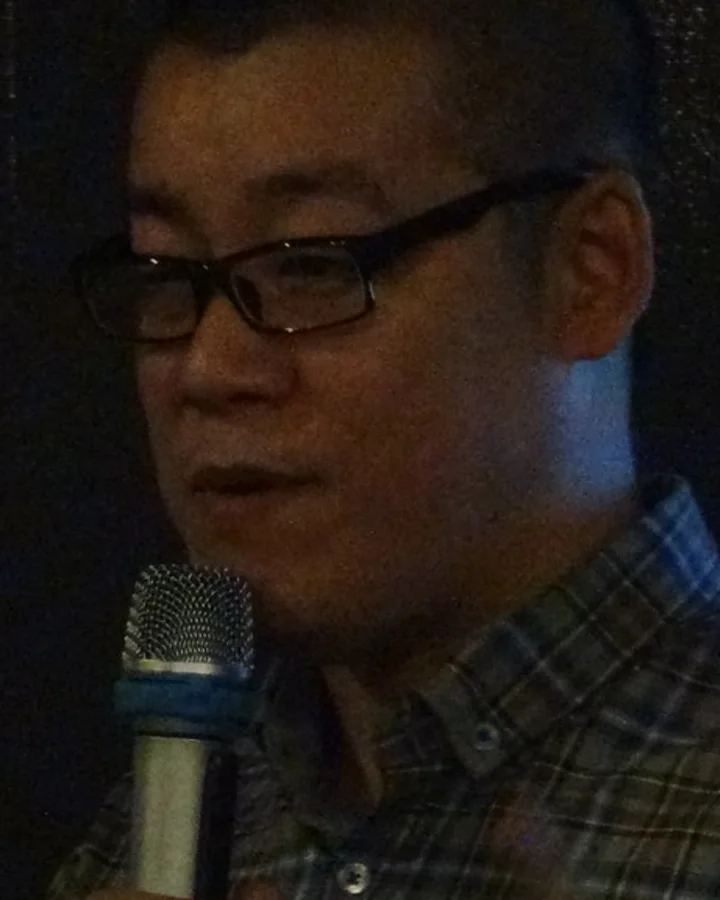
Capital and wealth path
- Sales, New Oriental teaching, and publishing built cash flow, audience, and knowledge-product capability
- Bought Bitcoin around 2011, with public holding claims creating industry reputation
- Converted reputation into management and investment interests through BitFund, project investments, platforms, and token financing
Asset and control boundaries
| Category | Finding | Status |
|---|---|---|
| Bitcoin holdings | Historical quantities mostly come from his statements; current balances and addresses are not fully public | Unknown |
| Fund assets under management | Fund assets under management cannot be counted directly as the manager's personal wealth | Confirmed |
| Project tokens and platform interests | Cost basis, lockups, sales, and ultimate beneficial arrangements are incomplete | Unknown |
Key-claim evidence ledger
| Claim | Reviewed finding | Grade | Source |
|---|---|---|---|
| Held a six-figure BTC position | Supported mainly by his public statements, without a complete address audit | B | Public talks and writing |
| BitFund size equals personal wealth | Incorrect; entrusted or fund assets must be separated from personal interests | A | Asset-ownership principle |
| Permanently exited blockchain investing | Later public activity indicates a role and messaging shift rather than a clean permanent exit | B | Subsequent public record |
Priority open questions
- What are the acquisition cost, sales, gifts, taxes, and current balance of historical BTC?
- How do personal and entrusted assets reconcile across funds, platforms, and token projects?
Revision 2.0: Separated teaching income, Bitcoin investment, fund management, and project interests. (2026-08-31)
At a glance
Section titled “At a glance”| Topic | Current finding | Evidence |
|---|---|---|
| Birth and childhood | Born in Heilongjiang in 1972 and later moved with his parents to Yanji; exact date and city lack an official record | B |
| Family | Childhood migration with his parents is documented; their occupations and assets, siblings, spouse, and children are not reliably public | Unknown |
| Education | Li and New Oriental material describe an ordinary university and an accounting undergraduate degree; “Changchun University” rests mainly on secondary biographies | B/C |
| Education career | Former New Oriental TOEFL writing teacher and author of test-preparation, self-learning, and financial-education books | A/B |
| Bitcoin entry | Li says he began buying in 2011; contemporaneous reporting confirms he was an early Chinese holder and educator | B |
| Historical holdings | In 2013 he answered “six figures, first digit 1”; this is a historical self-reported range, not an exact or current balance | B (statement) / unaudited (quantity) |
| BitFund / INBlockchain | Established BitFund in 2013 and later founded INBlockchain; returns and personal beneficial interests lack a complete audit | B |
| Yunbi / PressOne | Investor/shareholder in Yunbi and initiator of PressOne; trading or fundraising was halted and refunds arranged in the 2017 regulatory response | A/B |
| EOS | Li says he made an angel equity investment and separately bought EOS tokens in the public market; amounts and exit results are unaudited | B |
| BigONE | Investment and public ecosystem association are supportable; reliable evidence does not establish him as sole founder or controller | B/C |
| Current net worth | No audited net worth, wallet schedule, fund interests, or current cap tables are public | Unknown |
A denotes regulatory, listed-company, or organizational primary documents; B contemporaneous reliable interviews, attributable first-person manuscripts, and corroboration; C credible secondary reconstruction; D an online claim without traceable original evidence.
Family, childhood, and education
Section titled “Family, childhood, and education”A 2016 Global People oral-history profile says Li was born in Heilongjiang in 1972, moved to Yanji with his parents, and later attended university in Changchun. It portrays an ordinary school background and does not describe inherited wealth or an elite family. Global People interview
New Oriental Online describes an undergraduate accounting education, sales work after graduation, and his later role as a New Oriental writing teacher. New Oriental Online Online biographies often turn this into “an accounting degree from Changchun University,” but this review found no school alumni record, diploma, or contemporaneous résumé. It therefore treats an ordinary university and accounting degree as the stronger finding and the exact institution as secondary.
No reliable source establishes his parents’ names, occupations, income, or assets, and no sibling record was found. In a 2018 interview Li mentioned having dinner with his wife on his birthday; that supports marriage at that time, not disclosure of her identity, the current status of the marriage, or children. Jiemian interview There is no evidence that family capital financed his Bitcoin entry, but absence of a public record cannot prove that his family provided no help.
From sales and New Oriental to knowledge products
Section titled “From sales and New Oriental to knowledge products”Li told Global People that his first job involved selling electronics in a computer market, where he wrote a detailed training manual. He later taught TOEFL writing at New Oriental and published test-preparation titles before writing broader works such as Be Friends with Time.
This phase created cash income and less tangible capital: teaching reputation, writing skill, publishing access, an online audience, and a New Oriental peer network. In 2018 Li recalled earning RMB600,000–700,000 after tax annually late in his teaching career. That remains a personal recollection without employer or tax records. Jiemian interview
In 2016 he launched the paid column The Road to Financial Freedom on Dedao. Global People reported more than RMB15 million in revenue in its first two months. That is reported platform gross revenue, not necessarily Li’s personal after-tax proceeds, but it establishes that author branding and paid education—not only crypto assets—had substantial monetization power.
Entering Bitcoin in 2011: what is and is not established
Section titled “Entering Bitcoin in 2011: what is and is not established”The initial 2,100 BTC
Section titled “The initial 2,100 BTC”Li gives a consistent broad account in his open-source manuscript The Self-Cultivation of Leeks and a 2018 interview: he bought 2,100 BTC around late April 2011 at roughly US$6, sold about three quarters after the price reached roughly US$24, failed at mining, and resumed accumulating during the bear market. Li’s open-source manuscript People’s Daily 2014 reconstruction
The contemporaneous People’s Daily reconstruction also records the sale of some Apple stock and the purchase of 2,100 BTC near a US$6 average, corroborating the outline. Exact execution times, venues, addresses, and fees remain unavailable, so 2,100 is not an onchain-audited quantity.
What “100,000 BTC” actually means
Section titled “What “100,000 BTC” actually means”Li says CCTV asked about his holdings in 2013 and he answered “six figures, the first digit is 1.” That means he claimed a range of roughly 100,000–199,999 BTC, not exactly 100,000. Media reports in 2013–2014 compressed the answer into “more than 100,000 BTC” and “China’s Bitcoin richest man.” People’s Daily 2014 report
Li later said at least two people in China held more and rejected the “richest” label. No attributable wallets, transaction history, or custody proof independently verify the range. Multiplying 100,000 by a 2026 market price would be even less defensible: sales, investments, losses, fund custody, taxes, and changes in beneficial ownership could all intervene.
Mining and trading losses
Section titled “Mining and trading losses”Contemporaneous reporting says Li assembled mining equipment in Shenzhen and attempted to build a large pool, without success. His manuscript also says frozen bank accounts associated with Yunbi forced repeated sales and repurchases from 2015 to 2017, costing more than 9,000 BTC. That is important to his wealth narrative but remains an attributable explanation without bank statements, wallet data, or an audit.
BitFund: converting reputation into fund management
Section titled “BitFund: converting reputation into fund management”Li established BitFund in 2013. An interview he posted on Bitcointalk that year called it a private fund investing in Bitcoin-related projects and emphasized legality and team quality. 2013 interview posted by Li
In a later direct interview, Li described early losses in ASICMiner shares and a quantitative team, recapitalizing the vehicle, and liquidating the first phase in 2018. BroadChain interview These sources establish the fund, strategic changes, and Li’s account of the outcome. They do not provide subscription documents, a complete NAV series, fee terms, investor distributions, or an independent audit.
BitFund’s significance extends beyond its claimed return. It converted early holdings, public reputation, and project selection into fund management, advisory networks, and access to project allocations. Personal wallets, fund assets, portfolio tokens, management fees, and carried interest must remain separate rather than being added to one personal balance sheet.
Yunbi, ICOINFO, and the 2017 regulatory response
Section titled “Yunbi, ICOINFO, and the 2017 regulatory response”Reliable reporting describes Li as an investor or shareholder in Yunbi and an investor in ICOINFO—not as Yunbi’s technical founder. Yunbi provided asset trading and project-listing access, placing him simultaneously in the roles of investor, platform stakeholder, and public opinion leader. China Youth Daily via People’s Daily
On September 4, 2017, seven Chinese authorities led by the People’s Bank of China ordered token-financing activity to stop, required completed offerings to arrange refunds, and restricted exchange businesses. PBOC policy record Yunbi halted trading and entered an exit process. This dossier records the regulator’s position and the historical response; it does not generalize that conclusion to every personal transaction, jurisdiction, or later period.
Li connected frozen bank accounts to large BTC losses in his own account. That illustrates how platform regulatory risk may affect his wealth, while the absence of a complete ledger prevents separation of customer, company, and personal assets.
PressOne: large fundraising and disclosure risk
Section titled “PressOne: large fundraising and disclosure risk”Li initiated the content-distribution project PressOne in July 2017. In a Caixin interview he said it had collected BTC, ETH, and EOS then worth roughly RMB520 million and would comply with refund requirements. Caixin interview reprint Contemporaneous reporting criticized the absence of a complete white paper and limited team disclosure despite participation by nearly 14,000 contributors. China Daily
“RMB500 million raised” is a historical valuation of assets entering an offering process—not Li’s personal income or project cash available after refunds. No complete public audit reconciles refund rates, token quantities, addresses, remaining assets, or development expenses. PressOne therefore demonstrates both his fundraising and brand power and the risk of celebrity credibility substituting for product disclosure.
EOS and other project investments
Section titled “EOS and other project investments”In 2018 Li said he invested US$1.5 million for a 5% interest in an EOS-related team or company and separately bought EOS tokens in the public market. Jiemian interview
The distinction matters: corporate equity, tokens, advisory allocations, and fund holdings are different assets. The US$1.5 million and 5% are attributable statements. His references to a US$6 billion valuation and a 200-fold gain were mark-to-model claims at the time, not audited exit proceeds. The EOS team also publicly distanced itself from Li during the 2017 regulatory event, showing that promotional association and project control cannot be conflated. Jiemian 2017 report
Li’s manuscript lists investments including Qtum, Zcash, Sia, GXChain, and Mixin, while acknowledging both successes and failures. Sources do not consistently identify whether Li personally, BitFund, INBlockchain, or another vehicle invested. This dossier therefore avoids a falsely precise portfolio or return table.
INBlockchain, BigONE, and role boundaries
Section titled “INBlockchain, BigONE, and role boundaries”Li later founded INBlockchain. His current personal site describes him as its founder and says he stopped participating in early-stage investment after 2018, stopped managing new funds after 2019, and after 2022 stopped investing outside secondary markets. Personal site This is his 2026 self-description, not an external audit, and it does not erase legacy fund or project relationships.
BigONE was founded in 2017. Commercial databases and Li’s own older writing describe him as an investor and connect BigONE to his “exchange owned by everyone” narrative; BigONE’s official description does not name him as sole founder or controller. Li’s 2017 article BigONE official description “Investor and publicly associated ecosystem figure” is therefore the safer description. Without cap tables, control agreements, and transaction history, BigONE customer assets, revenue, or risk cannot be attributed directly to Li.
The 2018 recording controversy
Section titled “The 2018 recording controversy”In July 2018, a private conversation of more than 50 minutes circulated publicly. It included crude assessments of industry figures and projects and discussion of traffic, consensus, investing, and project promotion. Li responded in an interview, rejected the claim that he exploited retail followers, and explained his investment approach. Jiemian interview
It is established that the recording caused a major controversy, that Li responded to its content, and that it exposed conflicts among celebrity influence, project investment, and public commentary. Derogatory or unverified claims about third parties in a private recording are not established facts, and no public judicial decision shows that every discussed project was fraudulent.
The episode remains relevant to wealth formation because it shows that personal brand and community attention can themselves become financing resources. When the same person holds project interests and comments publicly on the market, promotion, investment opinion, and independent research need to be separated.
“Withdrawal” and a brief listed-company role
Section titled ““Withdrawal” and a brief listed-company role”In September 2018 Li said he would stop making project investments; in 2019 he clarified that no longer investing in blockchain projects did not mean leaving the industry entirely. 2019 public statement “Leaving crypto” is therefore a media shorthand, not evidence that every asset and activity ended on one date.
Grandshores Technology’s annual report records Li’s appointment as executive director and co-chief executive on December 3, 2018 and resignation on May 8, 2019. Grandshores Technology 2021 annual report This roughly five-month formal role is company-record evidence, but it does not prove that the associated stablecoin plans launched or establish long-term income.
As of 2026, Li’s public site and GitHub show a greater focus on writing, self-learning, AI tools, and open-source work. GitHub profile That demonstrates a change in public work, not a complete audited asset exit or retirement.
Wealth-formation path and asset boundaries
Section titled “Wealth-formation path and asset boundaries”The evidence supports multiple potential sources:
- Electronics sales, New Oriental teaching, and test-preparation royalties;
- a small New Oriental listing-related shareholding and later U.S. equity investment;
- BTC trading and long-term exposure beginning in 2011, plus unsuccessful mining attempts;
- management fees, carried interests, and co-investment access through BitFund, INBlockchain, and related vehicles;
- investor or shareholder interests in platforms such as Yunbi and BigONE;
- equity, tokens, or advisory/investment allocations in EOS, Qtum, and other projects;
- Dedao subscriptions, books, communities, and other knowledge products;
- fundraising activity such as PressOne, whose project assets cannot simply be counted as personal wealth.
The often repeated RMB7 billion fortune came from a 2018 rich-list or media estimate, not a personal financial statement. Such estimates depend heavily on undisclosed token quantities and contemporaneous prices and do not deduct fund investors’ interests, lockups, liquidity costs, liabilities, or taxes. This dossier does not promote a historical peak estimate into current net worth.
The stronger conclusion is structural rather than numerical: early BTC exposure supplied the most dramatic capital jump; teacher-author branding supplied recurring cash flow and an audience; funds and platforms converted capital and influence into project allocation power. Trading losses, regulation, failed projects, and refunds also show why headline valuation is not realizable wealth.
Unresolved questions
Section titled “Unresolved questions”Public-record review update
Section titled “Public-record review update”The original CCTV program page has been located: Economic Half-Hour aired “Uncovering Bitcoin” on May 3, 2013 and retains the full video. The page has no searchable verbatim transcript. Li later said twice that his answer to the reporter was “six digits, beginning with one,” not an exact balance. The interview’s existence is therefore confirmed; “exactly 100,000 BTC that day” remains a later recollection without a wallet signature. Original CCTV program PANews interview transcript, Chinese
In a 2018 Jiemian interview, Li gave a more specific purchase path: he initially bought 2,100 BTC in 2011 at an average of roughly $6, continued trading and accumulating for about ten months, and stopped adding when Bitcoin approached $2 and he had exhausted available cash. This is more informative than “he bought a lot early” and shows that a later six-figure position was not one purchase. Exchange statements and addresses remain absent, so cumulative cost and remaining holdings cannot be reconstructed. Jiemian interview, Chinese
INBlockchain’s website claims that its partners accumulated more than 130,000 BTC through large OTC trades at an average cost of $1 and still held a substantial position. This is promotional fund material, uses “partners” rather than Li personally, and differs from his personal $6/2,100-BTC account. It proves that the investment organization made the aggregate claim, not Li’s individual balance. INBlockchain website
The former “original CCTV interview” gap is thus partly resolved; the remaining gap is the unedited transcript, attributable wallets, and subsequent separation of personal and fund holdings.
- Exact birth date and city, parents’ occupations and assets, siblings, marriage, and children;
- university name, graduation date, and verifiable academic record;
- 2011–2013 BTC purchase records, historical wallets, and the original unedited CCTV interview;
- complete separation of personal, BitFund, INBlockchain, Yunbi, and other entity assets;
- BitFund subscriptions, fees, NAV, investor distributions, and independent audit;
- PressOne addresses, refund ratio, remaining assets, development expenditure, and project status;
- EOS equity contract, dilution, exit, and token transactions;
- historical Yunbi and BigONE ownership, control, consideration, and exit;
- current BTC and other asset balances, liabilities, taxes, and net worth.
Assessment
Section titled “Assessment”Li’s rise does not require a fabricated family dynasty to explain it. The verifiable sequence is high-income teaching and writing that built an audience, unusually early BTC exposure beginning in 2011, conversion of holding reputation into fund and project allocation power, and further leverage through platforms, token financing, and paid knowledge products. He belongs in the history of early Bitcoin investment and education in China—not Bitcoin protocol creation.
His first-person accounts supply many essential details and are also the principal evidence risk. Historical holdings, fund returns, and project gains mostly lack attributable addresses, contracts, or audits; his investing, promotional, platform, and educational roles frequently overlapped. The dossier confirms early importance while rejecting claims that he exactly held 100,000 BTC continuously, that all project fundraising was personal income, or that a media estimate equals realizable wealth.
Key sources
Section titled “Key sources”- Global People: Li Xiaolai oral-history profile
- New Oriental Online: teaching, education, and publishing
- People’s Daily: 2014 reconstruction of Bitcoin buying and mining
- Li’s open-source manuscript: The Self-Cultivation of Leeks
- 2013 BitFund interview
- Jiemian: response on the recording, holdings, EOS, and investing
- PBOC: 2017 token-financing risk announcement record
- Caixin interview reprint: PressOne, Yunbi, and EOS response
- China Youth Daily via People’s Daily: ICO participants and interest relationships
- Grandshores Technology 2021 annual report
- Li’s current personal biography
- BigONE official description
Last reviewed August 30, 2026. Historical token quantities, project interests, fund returns, and personal net worth have not been independently financially audited. This page is not investment, legal, or tax advice.