Vitalik Buterin
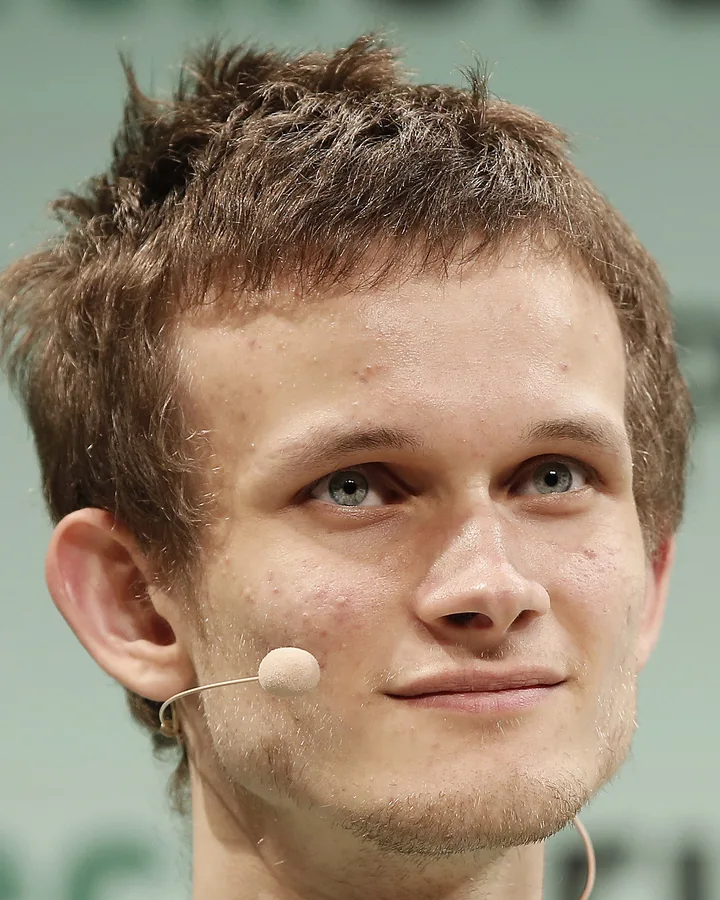
.jpg)
Capital and wealth path
- Family migration, math and programming education, and Bitcoin writing built early human and reputational capital
- Proposed Ethereum and organized protocol development before the crowdsale
- Built crypto wealth through founder allocation, publicly identified ETH, and later project interests
Asset and control boundaries
| Category | Finding | Status |
|---|---|---|
| Public ETH addresses | Some addresses were publicly identified but do not necessarily cover all assets | Confirmed |
| Ethereum Foundation | The Foundation treasury is not Vitalik's personal wallet | Confirmed |
| Protocol control | He has substantial agenda influence but cannot unilaterally upgrade the network | Confirmed |
Key-claim evidence ledger
| Claim | Reviewed finding | Grade | Source |
|---|---|---|---|
| Proposed Ethereum | Confirmed by the 2013 paper and contemporaneous record | A | Ethereum paper |
| Created Ethereum alone | Incorrect; Ethereum had multiple co-founders and core contributors | A | Ethereum Foundation history |
| Can unilaterally control Ethereum | No protocol key or corporate authority lets him compel a network-wide upgrade | A | Protocol governance material |
Priority open questions
- What is the full scale of undisclosed wallets and non-ETH investments?
- How have donations, token disposals, and taxes changed current net assets?
Revision 2.0: Clarified founder allocation, Foundation treasury, and protocol-influence boundaries. (2026-08-31)
At a glance
Section titled “At a glance”| Topic | Current finding | Evidence |
|---|---|---|
| Birth | January 31, 1994, Kolomna, Russia | A/B |
| Parents | Dmitry Buterin and Natalia Ameline; both had computer-science backgrounds | B |
| Early household | University dormitory in post-Soviet Russia; no documented family fortune | B |
| Migration | Moved to Canada in 2000 at age six | B |
| Education | Abelard School; University of Waterloo computer science, without a completed degree | A |
| Early external capital | US$100,000 Thiel Fellowship in 2014 | A |
| Primary wealth source | Ethereum-related token allocations and ETH appreciation; exact current holdings unknown | B, valuation |
| Ethereum role | Conceiver, original white-paper author, co-founder, and influential protocol researcher—not CEO or network owner | A/B |
A denotes official institutional, protocol, university, or recipient-organization records; B direct interviews or well-corroborated reporting; C credible secondary reconstruction; D unverified online claims.
Family background
Section titled “Family background”Parents and the post-Soviet starting point
Section titled “Parents and the post-Soviet starting point”Vitalik was born in Kolomna to Dmitry Buterin and Natalia Ameline. TIME’s reporting, based partly on interviews with the family, describes both parents as computer scientists who were still students when he was born. The family initially lived in a university dormitory with a shared bathroom. TIME also reports that Natalia’s parents lost their savings during the inflation and institutional collapse surrounding the end of the Soviet system. TIME profile
These details point away from inherited financial wealth. They do, however, reveal substantial human capital: technical parents, early access to a family computer, and a household in which mathematics, systems, and political institutions were discussed. By age four, according to the same family account, Vitalik was experimenting with spreadsheets on an old IBM computer.
The parents later separated. Dmitry settled in Toronto with Vitalik, while Natalia initially lived in Edmonton and worked as a financial analyst. Public reporting identifies later technology, education, and blockchain work by both parents, but those later careers should not be projected backward into a wealthy pre-Ethereum family origin. The New Yorker
What is not established
Section titled “What is not established”No reliable public evidence establishes a large family business, inherited investment portfolio, political dynasty, or ancestral fortune. Public sources are also too limited to reconstruct the parents’ complete finances, the grandparents’ assets, or transfers within the family. “No inherited fortune found” is therefore an evidence boundary, not a claim that every relative had no assets.
Migration and education
Section titled “Migration and education”Vitalik moved to Toronto in 2000, at age six. Reporting describes an intellectually advanced but socially isolated childhood. He attended the small private Abelard School and graduated in 2012. The school itself records him as an alumnus and later Thiel Fellow. Abelard School
He entered the University of Waterloo to study computer science and worked as a research assistant for cryptographer Ian Goldberg. Waterloo confirms both facts. Sources differ slightly on the departure date: a contemporary Ethereum biography says he decided in 2013 to leave Waterloo and travel through Bitcoin communities, while later Waterloo and Basel biographies connect his formal departure to the 2014 Thiel Fellowship. The safe conclusion is that he did not complete the degree and was working on Ethereum full-time by 2014. University of Waterloo, Ethereum Foundation, 2014
The US$100,000 fellowship was meaningful early risk capital and access to an entrepreneurial network. It should neither be omitted from a “self-made” narrative nor mistaken for the source of his later fortune. In 2018, the University of Basel awarded him an honorary doctorate for contributions to cryptocurrencies, smart contracts, mechanism design, and decentralization; it was an honorary award, not a completed PhD program. University of Basel
From Bitcoin writing to Ethereum
Section titled “From Bitcoin writing to Ethereum”An early information advantage
Section titled “An early information advantage”Dmitry introduced his son to Bitcoin in 2011. Vitalik began writing for Bitcoin Weekly, reportedly receiving five BTC per article, and co-founded Bitcoin Magazine with Mihai Alisie later that year. The contemporary Ethereum team biography confirms that he joined the Bitcoin community in March 2011 and co-founded the magazine in September. Ethereum Foundation, 2014
This work produced more than small token payments. It gave a teenager direct access to protocol developers, entrepreneurs, ideological debates, and the shortcomings of early blockchain scripting. In 2013 he stepped away from regular studies, travelled through Bitcoin communities, and circulated the Ethereum white paper in November.
Conception, co-founders, and launch
Section titled “Conception, co-founders, and launch”Buterin supplied the original general-purpose smart-contract concept, but Ethereum was not built by one person. Seven other people are commonly identified as co-founders: Mihai Alisie, Amir Chetrit, Anthony Di Iorio, Charles Hoskinson, Joseph Lubin, Gavin Wood, and Jeffrey Wilcke. Their roles ranged from legal formation and financing to formal specification, client software, and organizational development. Ethereum history
The founding group disagreed over whether Ethereum should be organized around a for-profit company or a nonprofit foundation. Buterin chose the nonprofit path, and the Ethereum Foundation was established in Switzerland. A 2014 public sale collected more than 31,000 BTC—about US$18 million at the time—and the network launched on July 30, 2015. Ether sale overview, Ethereum history
Ethereum timeline and personal contribution
Section titled “Ethereum timeline and personal contribution”| Date | Protocol or organizational event | Buterin’s evidenced role |
|---|---|---|
| November 2013 | The Ethereum white paper began circulating in the early community | Originator of the concept and white-paper author |
| January 2014 | Ethereum was presented publicly in Miami and the founding group formed | Principal presenter and co-founder |
| July–September 2014 | The Swiss Ethereum Foundation was formed and the ether sale completed | Advocate of the nonprofit structure; participant in design and fundraising |
| July 30, 2015 | Frontier mainnet launch | Core researcher and public representative, not sole implementer |
| July 2016 | Hard fork after The DAO; Ethereum Classic retained the unforked history | Public advocate of the fork and participant in the debate |
| December 2020 | Beacon Chain launch | Long-term proof-of-stake researcher and roadmap contributor |
| September 15, 2022 | The Merge moved mainnet from proof of work to proof of stake | Major intellectual and research advocate; implemented by multiple client teams |
| March 2024 | Dencun/EIP-4844 introduced blob data for rollups | Important contributor to the rollup-centric and proto-danksharding direction |
| 2025 | The Foundation clarified that he continues to provide technical and intellectual guidance | Foundation board member/founder, not day-to-day executive |
The timeline shows that Buterin neither disappeared after writing the white paper nor personally wrote and approved every upgrade. Ethereum changes move through EIPs, research, client implementation, testing, core-developer coordination, and adoption by nodes and validators. Ethereum governance The Merge preserved the execution history from genesis and changed the block-production consensus mechanism; it did not create an entirely new Ethereum history. The Merge
Research agenda and soft power
Section titled “Research agenda and soft power”Buterin continues to propose directions for scaling, account abstraction, privacy, state management, single-slot finality, and cryptoeconomics. He has no final veto over EIPs, but his writing often determines which problems receive attention and how the ecosystem frames them. The Foundation’s 2025 governance explanation lists him on the board and says he continues to provide technical and intellectual guidance, while co-executive directors and management handle execution. Ethereum Foundation structure
His power is therefore best described as high-prestige research and agenda leadership—not that of a corporate CEO, chain administrator, or unilateral upgrader. That distinction is central to assessing founder risk.
Wealth formation and its limits
Section titled “Wealth formation and its limits”The defensible wealth sequence is:
- small Bitcoin-denominated writing income and technical work;
- the US$100,000 Thiel Fellowship as development runway;
- Ethereum founder/developer allocations and accumulated ETH;
- the large appreciation—and repeated volatility—of ETH;
- no documented inherited business or family investment fortune.
TIME reported in 2022 that public blockchain records, confirmed by a spokesperson, supported a lower-bound estimate of at least US$800 million at that moment. That is a historical snapshot, not a current audited net worth. Wallet attribution is incomplete, asset prices move continuously, private keys do not disclose beneficial ownership arrangements, and illiquid tokens can produce misleading headline valuations. TIME profile
The 2021 SHIB episode demonstrates this problem. Token creators had sent enormous quantities of meme tokens to Buterin without treating that transfer like a negotiated investment. He donated 50 trillion SHIB to India’s Crypto Relief. The transfer was described as worth roughly US$1 billion at the moment, but Crypto Relief later reported total conversion proceeds of about 463.9 million USDC by October 2021. Nominal wallet value, realizable proceeds, and personal wealth were therefore three different quantities. Crypto Relief accounting
Influence, governance, and disputes
Section titled “Influence, governance, and disputes”Ethereum has no CEO, board, or single party that owns the network. Buterin nevertheless has exceptional soft power: he frames research problems, proposes roadmaps, authors technical and philosophical essays, and can influence community priorities. Client teams, researchers, validators, application developers, and users can still reject or ignore proposals. Describing him as either an all-powerful controller or merely an ordinary contributor misses this asymmetry.
The 2016 DAO exploit made the tension visible. Buterin publicly supported a hard fork that returned affected funds; developers implemented it after extensive public debate and community signaling. Users remained free to follow the non-fork chain, which survives as Ethereum Classic. The episode is evidence of Buterin’s agenda-setting influence and of the limits of that influence at the same time. Hard fork completion notice, TIME account
Other recurring debates concern Ethereum’s initial token distribution, foundation influence, scaling choices, staking concentration, and whether a visible founder is compatible with credible neutrality. These are governance questions; they are not resolved simply by citing the network’s open-source code or Buterin’s personal preference for decentralization.
The 2022 Merge provides another test of that governance model. Buterin and many researchers promoted the proof-of-stake direction for years, but the upgrade required specifications, multiple consensus and execution clients, testnets, and ecosystem coordination. Dencun in 2024 then prioritized rollup data costs. The continuity of the roadmap shows strong personal agenda influence; multi-client implementation and voluntary upgrading show that the influence still requires organizational consensus. Ethereum roadmap
Philanthropy and public-interest work
Section titled “Philanthropy and public-interest work”Buterin’s documented giving focuses on pandemic response, longevity research, public goods, and catastrophic-risk research.
- SENS Research Foundation reported more than US$2.41 million in ETH from Buterin in its 2018 annual report. SENS annual report
- Crypto Relief records the 2021 gift of 50 trillion SHIB and explains how the tokens were gradually converted and deployed for Indian public-health projects. Crypto Relief
- Future of Life Institute says a major unconditional 2021 contribution from Buterin helped create its endowment; it also attributes a US$25 million multi-year existential-risk grants program to support from Buterin and the Shiba Inu community. FLI finances, FLI grants announcement
These records establish substantial giving, but headline token values should still be separated from dollars ultimately realized by recipient organizations.
Assessment
Section titled “Assessment”Vitalik Buterin’s path combines constrained early material circumstances with unusually strong intergenerational technical capital. His parents did not supply a documented fortune, but they supplied knowledge, a computer-oriented environment, migration to Canada, and early exposure to Bitcoin. Abelard, Waterloo, cryptography research, global Bitcoin networks, and the Thiel Fellowship added institutional and social capital.
His wealth was created through founding-era access to Ethereum and the later value of ETH. His power is similarly hybrid: he does not legally own or unilaterally operate Ethereum, yet his reputation and research leadership make him more influential than an ordinary participant. Both sides are necessary for an accurate account.
Unresolved questions
Section titled “Unresolved questions”Public-record review update
Section titled “Public-record review update”Official material constrains the aggregate Ethereum genesis pools even though it does not reveal each founder’s share. The 2014 sale announcement defined public sales as X and created two additional pools of 0.099X each: one to compensate early contributors and one as a long-term Foundation reserve. With final public sales of 60,102,216 ETH, each pool was roughly 5.95 million ETH. The official material does not disclose Buterin’s individual allocation from the contributor pool. Ethereum Foundation sale announcement Ethereum white-paper issuance section
In January 2026, Buterin publicly stated from his own account that he had withdrawn 16,384 ETH to deploy over several years into open-source security, privacy, verifiable software and hardware, and other public technologies. This is a new quantified personal funding commitment and shows that he could direct at least that scale of ETH at that time. It is not his complete balance, and a planned allocation still requires project-by-project recipient and outcome verification. Buterin’s public statement
Accordingly, “every founder allocation is unknown” can be narrowed to “the aggregate contributor and Foundation pools are known, while the individual allocation schedule is not.” Likewise, some donation commitments and transfer totals are public, while ultimate recipients, realized value, and long-term outcomes remain project-specific gaps.
- His complete current ETH and other asset holdings across all addresses and entities;
- The exact economic terms of every founding-era allocation and later disposition;
- Complete private finances and asset transfers within the Buterin family;
- How much of Ethereum’s future technical direction would change without his continuing involvement;
- The final realized value and long-run outcomes of every token-denominated donation.
Key sources
Section titled “Key sources”- Ethereum.org: History, founder, launch, and ownership
- Ethereum Foundation: Ethereum Now Going Public (2014)
- TIME: The Man Behind Ethereum Is Worried About Crypto’s Future
- The New Yorker: The Prophets of Cryptocurrency
- University of Waterloo: Vitalik Buterin visits Waterloo
- University of Basel: Honorary doctorate
- Crypto Relief: What happened to the SHIB donation
- Future of Life Institute: Finances
- Ethereum.org: governance process
- Ethereum.org: The Merge
- Ethereum Foundation: 2025 management and board structure
Last reviewed August 30, 2026. Wallet attribution, token values, organizational roles, and protocol influence can change.