Chandler Guo
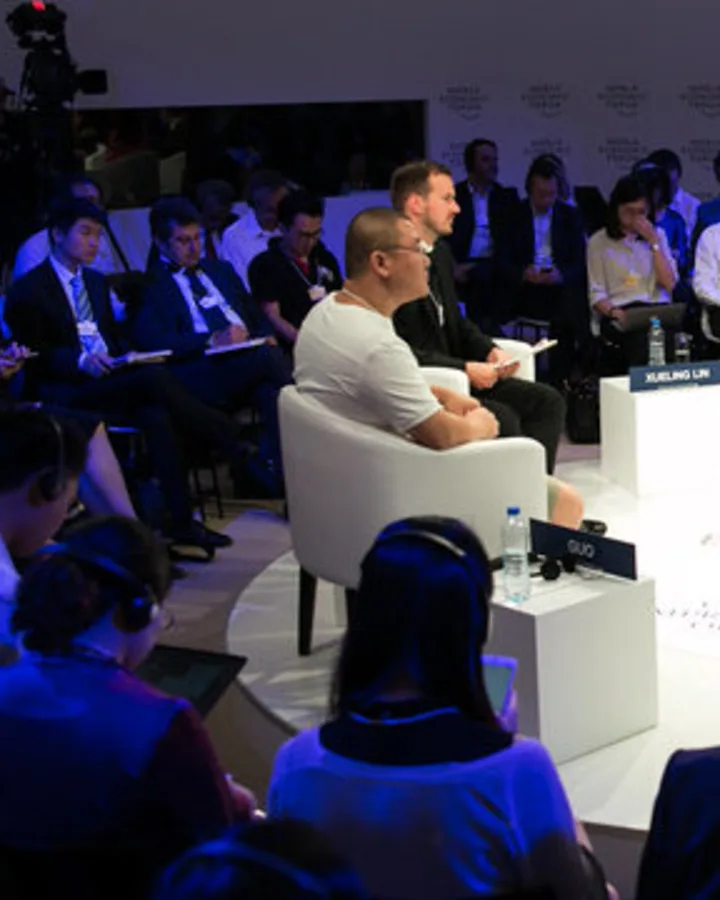
Capital and wealth path
- A family business environment and early conventional entrepreneurship built sales and organizing experience
- Entered Bitcoin mining, mining farms, and early project investing to gain crypto exposure
- Expanded wealth through project-financing introductions, advisory fees or his claimed 'one-point' model, and token allocations
Asset and control boundaries
| Category | Finding | Status |
|---|---|---|
| Capital raised | Total project capital raised cannot be counted as the introducer's personal wealth | Confirmed |
| 'One-point' fee | Supported by his public video statements but lacks project-by-project contracts and settlement records | Inferred |
| Mining and property assets | Public display can show use or control, not debt-free personal ownership | Unknown |
Key-claim evidence ledger
| Claim | Reviewed finding | Grade | Source |
|---|---|---|---|
| Raised for projects including Binance and took about 1% | Supported by his own public video; counterparty, contract, and receipt evidence remains unavailable | B | First-person video statement |
| Participated in large early Bitcoin mining operations | Supported by contemporaneous interviews and event records; exact personal interest is unclear | B | Contemporaneous interview |
| Displayed homes and cars equal net assets | Ownership, debt, leases, and co-ownership cannot be established from display alone | D | Social-media display |
Priority open questions
- Which projects signed 1% or similar financing-fee agreements, and what was actually settled?
- What are the beneficial ownership and liabilities of mining, token, property, and company interests?
Revision 2.0: Separated capital raised, fee income, token allocations, and displayed assets. (2026-08-31)
At a glance
Section titled “At a glance”| Topic | Current finding | Evidence |
|---|---|---|
| Origin | Pingyao, Shanxi; Guo and profiles describe early small-scale sales and a family beef business | C |
| Father and grandfather | The claim that both were small merchants comes mainly from later profiles | D |
| Startup money | The story that his father gave him RMB 10,000 in 2003 lacks a reliable original source | D |
| Early business | Disc sales, internet telephony, and beef sales are largely interview-derived | C |
| Mining | Participation in organizing and operating the Yihang/Bitbank mine is supported by reporting | B |
| Fundraising and promotion | Guo said he helped projects including Binance raise funds and charged a “one point” (1%) token/advisory allocation | B (the attributed statements) / C (amounts) |
| Major wealth | Early holdings, mining, ether, and fundraising/advisory/promotion allocations may all have been material; scale is not auditable | C |
A denotes official records; B contemporaneous investigation or corroboration; C attributed interviews or credible secondary reporting; D a repeated claim without a traceable primary source.
Family background: the limit of the evidence
Section titled “Family background: the limit of the evidence”Guo has described himself as being from Pingyao, not attending college, selling discs and internet-phone products in Beijing, and later participating in a family beef business. Later profiles add that his father and grandfather were small merchants and that his father gave him RMB 10,000 to pursue opportunities in Beijing. Those additions generally provide no household, corporate, property, or traceable original interview record.
The independent review can establish that Guo publicly described a family beef business; it cannot establish his father or grandfather’s precise occupation, ownership, or assets. The evidence supports neither an extreme-poverty story nor a hidden-dynasty theory. A previous inference that the family necessarily provided a meaningful financial safety net is therefore not treated as established.
Business before crypto
Section titled “Business before crypto”Interviews and early profiles usually describe Guo selling discs and internet-phone products around Beijing universities after failing the entrance exam, then returning to Shanxi to work in Pingyao beef sales and online promotion.
These accounts help explain his sales, publicity, and organizational abilities. Precise claims such as monthly income of RMB 10,000 or the purchase of an RMB 300,000 stretched vehicle still depend mainly on personal recollection. At most, they suggest that he had become a small operator before Bitcoin—not that he already controlled substantial capital.
Bitcoin and mining
Section titled “Bitcoin and mining”Guo began publicly promoting Bitcoin around 2013 and later became involved in the Yihang mining site in Ordos, Inner Mongolia. Jiemian’s 2021 site visit and reconstruction said a local government review dated the facility’s completion to 2014. Industry recollections placed Guo’s involvement in 2014, while the corporate-history account pointed to a formal takeover and renaming in 2015. Accounts also differ over how Huobi, ZB’s predecessor, Bitmain, Canaan, and other parties supplied capital, machines, or business relationships. Jiemian investigation
Guo said partners supplied capital, equipment, and the site while he assembled the relationship, received carried equity, and became the effective controller. This describes a resource organizer and operator—not necessarily the sole legal owner. It also does not mean that all bitcoin mined at the facility belonged to him.
Sources differ on when control changed, who invested, the transfer price, and the eventual proceeds. Figures such as 5% of global hash rate, 100 BTC per day, RMB 20 million of infrastructure, or a windfall from investing sale proceeds in ether must remain attributed to the mine, Guo, or industry lore rather than being combined into a personal balance sheet.
Industry activity timeline
Section titled “Industry activity timeline”| Date | Activity | Evidence and limit |
|---|---|---|
| Around 2013 | Promoted Bitcoin and joined early industry conferences and investor communities | Interviews and industry records corroborate the broad activity |
| 2014–2015 | Became involved in operating the Yihang/Bitbank mine in Inner Mongolia | Contemporary and later site reporting supports involvement; legal percentage unknown |
| 2015–2016 | Shifted from Bitcoin mining toward holding ETH and Ethereum mining | Primarily autobiographical; transaction scale is unaudited |
| 2016 | Publicly supported Ethereum Classic after The DAO fork | Confirmed by contemporary and retrospective industry reporting |
| 2017 | Participated in ICO events, fundraising, investor introductions, and promotion | Extensive attributed interviews; project accounts remain incomplete |
| 2018 | Moved to the United States and publicly displayed “Chive Manor” and other assets | Public activity is documented; net home equity is unknown |
| 2022 | Promoted the EthereumPoW (ETHW) fork to retain proof of work after The Merge | Public interviews and the resulting chain confirm the campaign; long-term economic result was limited |
The timeline shows that Guo’s enduring advantage was not a single technical invention but the ability to organize miners, capital, projects, exchanges, and Chinese-speaking communities. At different times he used the labels miner, investor, adviser, promoter, and fork advocate. None automatically establishes a formal corporate office or protocol-development contribution.
Ethereum Classic and EthereumPoW
Section titled “Ethereum Classic and EthereumPoW”After The DAO incident in 2016, Ethereum implemented a hard fork to address the diverted funds; the chain without the state change continued as Ethereum Classic. Guo became a prominent ETC supporter. He later acknowledged that moving his ETH exposure into ETC had not worked out well in price terms. Blockworks interview
As Ethereum prepared to move to proof of stake through The Merge in 2022, Guo publicly organized miners and supporters around ETHW. One rationale was to preserve a proof-of-work network for miners who had invested in GPUs and power infrastructure. Direct interviews by CoinDesk, Forkast, and Blockworks confirm his role as advocate and public representative, while technical development was performed by a broader and structurally opaque group. CoinDesk Forkast
The campaigns expanded his visibility while revealing an economic position: proof-of-work miners and associated asset owners faced direct losses when Ethereum moved to proof of stake. A new-chain campaign can be interpreted as ideology, miner assistance, or protection of asset interests; the record does not reduce motive to one explanation. ETHW’s existence also does not establish that Guo personally owned the protocol, development team, or all forked tokens.
Fundraising, promotion, and the “one point” model
Section titled “Fundraising, promotion, and the “one point” model”There is unusually clear evidence that Guo made these claims himself, but three questions must remain separate: whether he participated in fundraising, how he generally charged projects, and what any particular project actually paid him.
In a 2018 Wang Feng interview, the question explicitly described Guo as having endorsed roughly 80–100 projects and receiving 1% of each project’s tokens. Guo replied that he had tried to deter requests by saying that he no longer invested, would only lend his name, and required a 1% advisory fee. Instead, he said, projects requested an address and sent tokens; he put the cumulative number near 100. Interview transcript A separate contemporaneous transcript of a video interview described his work as publicity, WeChat promotion, and access to a Chinese community. Guo said he had received 1% allocations from roughly 80 projects and that his first five projects after moving to the United States paid an aggregate $5 million, which he used to buy a home. Bibi News interview transcript A People’s Venture Capital report repeated the 1%, 80-project, and $5 million claims at the time. People’s Venture Capital
“One point” should therefore be read as 1% of a project’s tokens, advisory allocation, or other project economic interest—not as verified evidence that Guo received 1% of all cash raised. The denominator, vesting terms, liquidity, and eventual value could differ radically across projects. Tokens valued at an issuance price are not the same as realized proceeds. No public project list, contract set, attributed receiving addresses, disposal history, or tax records have been found, so “nearly 100 projects × 1%” cannot responsibly be converted into net worth.
Relationship to the Binance ICO
Section titled “Relationship to the Binance ICO”Guo has separately named Binance among the projects whose fundraising he helped. He said that after returning from New York he organized ICO events in Chengdu and “we organized Binance’s fundraising” there. In another interview, he said his most frequent contact with Changpeng Zhao came while helping with the Binance ICO and that he brought investors into it. AiCoin interview Liantianxia interview transcript A later rating report reproducing the early Binance white-paper investor list also named Guo as an individual investor. That supports a connection to the early financing circle, but not a specific amount or compensation. TokenClub report
No Binance subscription ledger, contract, attributable on-chain record, or company disclosure located in this review establishes how much Guo raised, whether he acted in an official capacity, or whether Binance paid him 1%. The accurate finding is therefore: helping Binance fundraise is a repeated, attributable claim by Guo; routinely charging “one point” is a separate, contemporaneously documented business model; the available evidence does not establish that Binance itself paid him 1%.
Significance for his wealth
Section titled “Significance for his wealth”The record supports describing this activity as fundraising, investor introductions, promotion, and resource brokerage exchanged for tokens or advisory allocations—not merely “project investing.” On Guo’s own account, five projects after his move to the United States generated $5 million and directly financed a large property purchase. In his wealth narrative, this was therefore plausibly a major source of capital.
That significance remains an assessment based on attributed statements, not an audited asset finding. Token compensation also created a direct conflict of interest: Guo’s promotion or investor introductions should not be interpreted as independent due diligence or proof of project quality. Failed, illiquid, or locked tokens cannot be counted at headline issuance values as realizable wealth.
Wealth-formation path
Section titled “Wealth-formation path”The public record supports a broad sequence:
- Guo’s own account of small sales activity in Beijing and Pingyao;
- Early Bitcoin promotion;
- Organizing equipment, capital, sites, and electricity for mining;
- Holding or investing in BTC, ETH, and other crypto assets;
- Fundraising for projects including Binance, introducing investors, and providing advisory or promotional services in exchange, by his account, for token allocations;
- Publicly displaying and describing property and vehicle purchases in the United States.
The first stage is primarily autobiographical; the second and third have interview and investigative support. Multiple contemporaneous interviews establish that Guo made the claims in stage five, but the scale of that income still lacks auditable addresses, transaction records, and project contracts. Stages four and six likewise lack complete asset records, title documents, or financial statements. The visible lifestyle change is evidence of changed consumption, not a reliable measure of net worth. Claims that Guo had a fortune of “tens of billions of yuan” are not reliable net-worth findings.
Cars and “Chive Manor”
Section titled “Cars and “Chive Manor””Guo has publicly discussed buying cars with 100 BTC or approximately 25 BTC and has shown his U.S. home. These are relevant to his public persona, but:
- an attributed BTC figure is not an independently verified on-chain transaction;
- listing price, sale price, mortgage balance, and home equity are different measures;
- valuing historical spending at a later BTC price is opportunity-cost arithmetic, not purchase cost or current net worth.
This profile therefore does not use cars or property prices to infer his parents’ wealth, nor does it count hypothetical unspent bitcoin as an asset.
Investment identity and portfolio boundaries
Section titled “Investment identity and portfolio boundaries”Guo is frequently described as founder of Bitangel Fund, an angel investor, or an investor associated with AU21 Capital. Project papers and investment databases name BTC123, Bitbank, BW, Bither, Qtum, Current, AiLink, and others. But appearing on an advisory page, receiving free tokens, investing personal cash, and completing an equity investment through a fund are four different relationships. Public databases record only a handful of verifiable rounds, which does not match his claim of nearly 100 projects.
This dossier therefore does not publish a falsely precise mixed-definition “portfolio.” A project should identify the contracting party, cash or token consideration, advisory versus investment role, date, vesting, and exit before being listed as verified. This gap is also why the scale of Guo’s wealth remains level C.
Unresolved questions
Section titled “Unresolved questions”Public-record review update
Section titled “Public-record review update”Changpeng Zhao provided corroboration independent of Guo when recounting Binance’s launch. Zhao said that in June 2017 he attended a Chongqing potluck organized by Chandler Guo, where everyone urged him to use an ICO rather than venture funding; he then instructed his team to draft the Chinese and English white papers. This confirms Guo as the organizer of an important early setting and an advocate for the ICO route. Zhao did not say that Guo handled subscriptions, guaranteed a fundraising amount, or received a 1% fee. Epicenter interview transcript
In an October 2017 direct interview, Guo described Bitangel as holding a portfolio of “30+” crypto startups. In a 2018 interview, he separately claimed that roughly 80 projects had given him interests and that five post-move U.S. projects paid a combined US$5 million. These contemporary sources show that his adviser/token-compensation narrative was not invented years later, but “30+ invested projects,” “about 80 gifted projects,” and “five paying projects” are different populations and cannot be merged into an audited portfolio or income total. Irish Tech News interview 2018 interview transcript, Chinese
The Binance relationship can therefore be upgraded from Guo’s unilateral account to Zhao-confirmed event organization and influence over the ICO decision. Actual fundraising agency, custody of proceeds, and compensation contracts remain unverified.
- The names, businesses, and assets of Guo’s father and grandfather;
- Whether and when his father supplied RMB 10,000;
- Guo’s legal equity, carried interest, and proceeds from Yihang/Bitbank;
- Verifiable BTC, ETH, and token holdings at relevant dates;
- Net equity in his U.S. property;
- A complete list of projects that used Guo’s fundraising or promotional services, with contracts, token percentages, vesting, and disposal records;
- The amount of Binance ICO investment he actually introduced, his formal role, and any compensation;
- The counterparties, form of payment, and transaction evidence behind the claimed $5 million from five projects.
Assessment
Section titled “Assessment”Guo should not be packaged as a destitute entrepreneur who began with literally nothing, but there is also no evidence that inherited capital funded his entry into crypto at scale. The better-supported account is that he had sales experience before Bitcoin, then entered early mining as a promoter, deal organizer, and operator. Around 2017 he also monetized personal reach and fundraising access through token-priced advisory and promotional arrangements. That activity should be treated as a major candidate source of wealth, not folded into ordinary “project investment.” The extent of any family financial safety net remains unverified.
Confidence in this conclusion is lower than in the CZ and Justin Sun profiles. Without new corporate filings, equity agreements, tax records, or attributable wallet evidence, the family’s wealth should not be quantified further.
Key sources
Section titled “Key sources”- Jiemian: investigation of China’s mining sites
- Jiemian: migrating mines and low-cost electricity
- Interview: Wang Feng questions Chandler Guo
- Bibi News interview transcript: promotion for 1%
- People’s Venture Capital: the exchange, fundraising, and promotion chain
- AiCoin interview: organizing Binance fundraising in Chengdu
- Liantianxia interview transcript: helping the Binance ICO
- TokenClub: BNB project rating report
- CoinDesk: Guo and the post-Merge fork
- Blockworks profile
- Irish Tech News: 2017 direct interview
- Forkast: direct interview on Guo’s ETHW campaign
Last reviewed August 30, 2026. Attributed statements are not automatically treated as independently established facts.