Satoshi Nakamoto
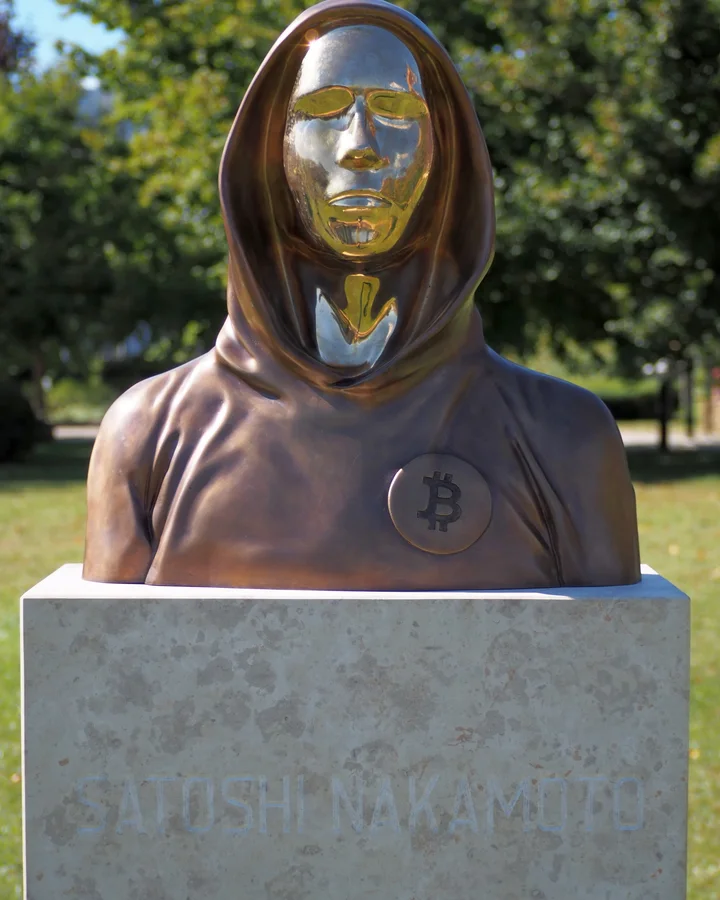

Capital and wealth path
- Published the Bitcoin paper and open-source client under a pseudonym
- Mined during the low-competition launch period and may have accumulated substantial unmoved BTC
- Withdrew from public development in 2010–2011; no verifiable monetization path is known
Asset and control boundaries
| Category | Finding | Status |
|---|---|---|
| Early addresses | Clustering models are inferential and cannot attribute every early address to Satoshi | Inferred |
| Bitcoin network | No founder-controlled company or treasury can unilaterally govern the network | Confirmed |
| Identity and estate | Identity, heirs, tax position, and key control remain unknown | Unknown |
Key-claim evidence ledger
| Claim | Reviewed finding | Grade | Source |
|---|---|---|---|
| Created Bitcoin | Confirmed by the paper, code, and early correspondence | A | Original paper |
| Owns roughly one million BTC | Derived from clustering models, not a confirmed balance | C | Research model |
| A named candidate is Satoshi | No candidate has supplied decisive proof such as a valid signature from known keys | Unknown | No decisive source |
Priority open questions
- Who can sign a fresh message with a recognized early key?
- Which early blocks can reproducibly be attributed to one miner?
Revision 2.0: Added standardized capital path, asset boundaries, and identity-claim evidence. (2026-08-31)
Core findings
Section titled “Core findings”| Topic | Current finding | Evidence |
|---|---|---|
| Public identity | The pseudonymous author who communicated, wrote, and developed as Satoshi Nakamoto in 2008–2011 | A |
| Civil identity | Unverified; neither an individual nor a group can be excluded | Unresolved |
| Nationality, gender, age | A P2P Foundation profile claimed a Japanese man born in 1975, but the fields are unauthenticated | D |
| Family background | No parents, grandparents, spouse, or family assets can be reliably attributed to the pseudonymous author | Unknown |
| Bitcoin role | White-paper author, original reference-implementation developer, genesis-block creator, and network launcher | A |
| Active period | Public proposal in 2008; last public posts in late 2010; no generally accepted communication after April 2011 | A/B |
| BTC holdings | Control of a small number of early keys is established; 600,000–1.1 million BTC figures are Patoshi-pattern estimates, not proof of identity or ownership | B/C |
| Excluded claimant | The English High Court ruled that Craig Wright was not Satoshi or the author of the paper or original code | A |
A denotes original correspondence, code, on-chain records, or judgments; B provenance-backed records from early participants; C reproducible but assumption-dependent attribution; D unauthenticated profile fields or circumstantial speculation.
The verifiable creation record
Section titled “The verifiable creation record”Paper and software
Section titled “Paper and software”On October 31, 2008, an author using the name Satoshi Nakamoto posted Bitcoin: A Peer-to-Peer Electronic Cash System to the Cryptography mailing list. The original message proposed peer-to-peer electronic cash without a trusted third party and described Hashcash-style proof of work as both issuance and double-spend defense. Original mailing-list post, Bitcoin paper
The work did not invent every component from nothing. The paper cited Adam Back’s Hashcash and Wei Dai’s b-money alongside digital signatures, Merkle trees, and distributed timestamping. Nakamoto’s central contribution was to combine prior components with difficulty adjustment, the most-work chain, economic incentives, and working software into a system without a central issuer.
Nakamoto created Bitcoin’s genesis block on January 3, 2009 and announced Bitcoin v0.1 on the mailing list on January 8. Hal Finney then ran the client, reported bugs, and received the first known person-to-person bitcoin transfer: block 170 included a 10 BTC test payment from Nakamoto to Finney. v0.1 release email, Hal Finney: Bitcoin and me
Activity timeline, 2008–2011
Section titled “Activity timeline, 2008–2011”| Date | Verifiable event | Evidence boundary |
|---|---|---|
| August 18, 2008 | bitcoin.org was registered | Privacy-protected registration does not identify a person |
| October 31, 2008 | White paper posted to the Cryptography mailing list | Establishes activity by the pseudonymous author |
| January 3, 2009 | Genesis block created with that day’s Times headline | Establishes the network start; motive remains interpretable |
| January 8–9, 2009 | v0.1 announced and early client placed on SourceForge | Establishes release; archival details of the exact binary remain debated |
| January 12, 2009 | 10 BTC sent to Hal Finney in block 170 | Verifiable early test transaction |
| 2009–2010 | Bugs fixed, versions released, sites maintained, and contributors contacted | Cross-checkable email, forum, and code record |
| August 2010 | Helped respond to the value-overflow bug and resulting chain reorganization | Shows continued critical maintenance responsibility |
| December 2010 | Public forum posting stopped around the WikiLeaks attention debate | Timing does not prove motive for departure |
| April 2011 | Told Mike Hearn of moving on and endorsed Gavin and others | Among the last communications with broad provenance consensus |
Public archives now collect hundreds of items from 2008–2011, spanning mailing lists, BitcoinTalk posts, and correspondence with early participants. Satoshi Nakamoto Institute The item count cannot prove that one natural person always controlled the accounts, but the communications, code changes, and incident response form a substantially continuous working identity.
What was the technical contribution?
Section titled “What was the technical contribution?”Bitcoin was not the first digital money and Nakamoto did not invent public-key cryptography. DigiCash, Hashcash, b-money, bit gold, and RPOW all predated it. The central contribution was combining proof of work for ordering and Sybil resistance in an open network with block subsidies, transaction fees, difficulty adjustment, and the chain with the most accumulated work into an operating consensus system.
The initial design also made durable choices: a 21 million cap, approximately ten-minute blocks, subsidy halvings every 210,000 blocks, the unspent-transaction-output model, a scripting system, and simplified payment verification for lightweight clients. These rules remain effective because later participants continue to run compatible software—not because Nakamoto retained a permanent legal or technical command right.
The newspaper headline in the genesis block is often read as an anti-bank-bailout manifesto. It at least timestamps the block no earlier than the publication, but Nakamoto left no full explanation that uniquely establishes motive. The headline and context are evidence; a single political identity is interpretation.
Not a permanently founder-controlled company
Section titled “Not a permanently founder-controlled company”Nakamoto initially held asymmetric influence over the code, website, forum, and network alert mechanism, but released Bitcoin as open-source software. Martti Malmi, Hal Finney, Gavin Andresen, and others progressively contributed code, testing, web work, and community support. During 2010–2011 Nakamoto transferred more maintenance responsibilities and withdrew from day-to-day activity.
Preserved correspondence shows Nakamoto telling Mike Hearn in April 2011 that the creator had moved on and that the project was in good hands with Gavin and others. No communication after late April has a provenance chain accepted broadly as authentic. Mike Hearn witness statement and correspondence provenance
This was not a single formal corporate appointment. Commit access, SourceForge permissions, bitcoin.org, the forum, and the network alert key passed gradually to different people and organizations. Developers can publish software but cannot compel nodes to install it. A U.S. regulatory description likewise explains that no single company controls Bitcoin rule changes and that updates have network effect only when participants adopt them. U.S. Federal Register
What the pseudonym does not establish
Section titled “What the pseudonym does not establish”The Satoshi P2P Foundation account listed a man living in Japan, born April 5, 1975. Those are self-entered fields on a pseudonymous account, not identity documents. British spellings, posting hours, programming style, and the British newspaper headline embedded in the genesis block can generate hypotheses about location or age; none uniquely identifies a person.
There is likewise no reliable proof that:
- Satoshi Nakamoto was a Japanese legal name;
- the author was necessarily male, one person, or resident in Japan;
- a government, intelligence service, or corporation secretly created Bitcoin;
- Nakamoto is dead or still controls the early private keys;
- the parents, spouse, or grandparents of any candidate are “Satoshi’s family.”
This dossier therefore cannot investigate parental occupations, ancestry, or childhood wealth as it can for named founders. Attaching a candidate’s family biography to Satoshi would disguise an unproven identity theory as fact.
Major identity hypotheses
Section titled “Major identity hypotheses”| Candidate or theory | Why the name recurs | Counterevidence or limit | Assessment |
|---|---|---|---|
| Hal Finney | Cryptographer, RPOW creator, first known BTC recipient; capability and chronology fit | Finney preserved correspondence and transaction records with Nakamoto and denied being the creator; the artifacts read more naturally as two participants | Meaningful hypothesis; no identity finding |
| Nick Szabo | Bit gold closely anticipated parts of Bitcoin; some stylometry points to him | He repeatedly denied it; similar prose and ideas are not key or authorship evidence | Circumstantial only |
| Adam Back | Hashcash author, white-paper reference, early cypherpunk; named again by a 2026 investigation | He denies it; shared ideas were common in the cypherpunk milieu, and no public cryptographic proof exists | Circumstantial only |
| Len Sassaman | Cypherpunk with anonymity and cryptography expertise; Nakamoto’s withdrawal preceded his 2011 death | No direct email, code, or key evidence; his family rejects the theory, and timing alone proves nothing | Highly speculative |
| Peter Todd | A 2024 HBO documentary interpreted a forum reply and career history as clues | Todd denies it; the forum text has other plausible readings, and early participants questioned the age and experience fit | Media theory; insufficient evidence |
| Dorian Nakamoto | His legal name included Satoshi Nakamoto; Newsweek identified him in 2014 | He denied involvement and said he had not known about Bitcoin; no code, correspondence, or key evidence | Unsupported misidentification |
| A team | The work spans cryptography, economics, networking, and C++, and stylistic variation can suggest collaboration | One unusually broad developer can also explain the record; the correspondence does not demonstrate shared account control | Neither excluded nor established |
| Craig Wright | Publicly claimed the identity after 2015 and produced purported early documents | The English High Court found extensive forgery and ruled he was not Satoshi or the author of the paper or original code | Excluded after judicial evidence review |
High-profile investigations in 2024–2026 separately pointed to Peter Todd, Adam Back, and a Hal Finney/Len Sassaman pairing. Their incompatible conclusions illustrate the weakness of narrative identification. WIRED’s review warned that suspect selection and linguistic analysis invite confirmation bias; none produced decisive cryptographic evidence. WIRED review
The legal finding on Craig Wright
Section titled “The legal finding on Craig Wright”In 2024 the High Court of England and Wales declared in COPA v Wright that Craig Wright was not the person behind the Satoshi Nakamoto pseudonym, did not create Bitcoin, and did not author the white paper or original software. The main judgment examined document forgery, metadata, and witness evidence in detail; a later injunction restricted further contrary claims. UK Judiciary main judgment, relief judgment
That ruling excludes Wright. It does not prove that any other candidate is Satoshi.
BTC holdings and the wealth boundary
Section titled “BTC holdings and the wealth boundary”Nakamoto mined during Bitcoin’s earliest period and controlled keys used in test transactions. The familiar claim that “Satoshi owns 1.1 million BTC,” however, does not describe a single self-declared wallet or signed proof of ownership.
Beginning in 2013, Sergio Demian Lerner used ExtraNonce behavior and other features of early block coinbase transactions to identify a dominant miner, later called the “Patoshi” pattern. Different grouping methods yield roughly 600,000 to 1.1 million BTC. BitMEX Research reproduced the work and found reasonable evidence of one dominant miner, but warned that block allocation was much less robust than commonly presented; its more conservative range was 600,000–700,000 BTC. BitMEX Research
Later work expanded the pattern toward roughly 1.1 million BTC, but that adds statistical assumptions rather than an identity signature. Responsible wording gives both method and range: roughly 700,000 is a more conservative dominant-miner estimate; roughly 1.1 million comes from broader Patoshi clustering. Neither is a “Satoshi balance lookup.”
Three uncertainties are essential:
- Similar mining patterns do not prove that every grouped block came from one entity.
- A dominant early miner is not, solely by pattern, proven to be Satoshi.
- Mining coins historically does not prove present key control, beneficial ownership, or realizable value.
This wiki therefore does not calculate a definite Satoshi net worth by multiplying an estimated coin count by today’s price, and it does not attach those estimated assets to a real-world candidate or family.
What would establish identity?
Section titled “What would establish identity?”The strongest public demonstration would combine a digital signature over a fresh, specific, non-reusable statement; a signing key directly tied to Nakamoto’s provenance-backed early activity; and documentary or witness evidence explaining the key’s chain of control since 2009.
Moving a purported Patoshi coin would prove control of a key, not necessarily historical authorship: transfer, inheritance, or theft would still need to be excluded. Screenshots, old files, private signing demonstrations, prose similarity, and knowledge of early details are not independently repeatable proof.
Impact of the disappearance
Section titled “Impact of the disappearance”Nakamoto’s departure reduced the possibility of a founder acting as final arbiter. Bitcoin rule changes instead require coordination among developers, node operators, miners, businesses, and users. This does not mean the system is free of concentrated power: code maintenance, hash power, custody, exchanges, capital, and public narrative create different asymmetries.
Pseudonymity also creates persistent risks. Claimants can invoke founder authority in litigation, promote forks, or influence expectations about dormant coins. Conversely, aggressive unmasking can harm unrelated candidates and families. The public-interest task is to preserve verifiable history and clear proof standards, not to turn the most compelling story into a legal name.
Consolidated review of open questions
Section titled “Consolidated review of open questions”A 2026 New York Times investigation presented Adam Back as the likeliest candidate based mainly on early-email chronology, writing style, British English, technical position, and alleged behavioral inconsistencies; Back denied the conclusion. WIRED then compared that investigation with a separate documentary arguing for a Hal Finney/Len Sassaman pair and found that neither supplied a key signature, unique chain of documentary custody, or evidence excluding the broader cypherpunk cohort. The new work makes the Back hypothesis more detailed, but does not change the identity status from unconfirmed to confirmed. WIRED: You Found Satoshi? Let’s See the Receipts Le Monde on the resulting dispute
The asset question can likewise be narrowed methodologically but not resolved as ownership. A 2026 analysis of litigation concerning suspected Satoshi coins identifies roughly 21,744 addresses and about 1.09 million BTC under a Patoshi-style definition, while explicitly describing them as suspected Satoshi addresses. A lawsuit seeking legal title to a selected address set does not validate the clustering method, identity, or current private-key control. Galaxy analysis of the Noah Doe case and address set
The defensible boundary after this review is: Craig Wright has been judicially excluded; Adam Back, Hal Finney, Len Sassaman, Peter Todd, and others remain conflicting candidates; and roughly 600,000–1.1 million BTC remains a model range for an early dominant miner rather than a named person’s confirmed balance. Legal identity, chain of key control, and whether that miner was Satoshi remain open.
Assessment
Section titled “Assessment”The verifiable Satoshi is a continuous body of work and conduct: publishing the paper in 2008, launching working software and a network in 2009, supporting early development, and withdrawing during 2010–2011. The civil identity, family origin, and true wealth behind that work remain unverified.
Nakamoto’s central historical contribution was not a single cryptographic primitive but the integration of prior research into an operating system with incentives, scarcity, and open participation. The identity question remains legitimate research, but without reproducible key and provenance evidence every real-world name remains a hypothesis.
Key sources
Section titled “Key sources”- Cryptography list: Bitcoin P2P e-cash paper
- Original Bitcoin paper
- Cryptography list: Bitcoin v0.1 released
- Hal Finney: Bitcoin and me
- Mike Hearn witness statement on correspondence with Satoshi
- BitMEX Research: Does Satoshi have a million bitcoin?
- High Court: COPA v Wright main judgment
- WIRED: 2026 review of identity investigations
- Satoshi Nakamoto Institute: public communications archive
- Satoshi Nakamoto Institute: early code archive
- U.S. Federal Register: Bitcoin upgrades and absence of a single controlling entity
Last reviewed August 30, 2026. A new signature, key movement, archive discovery, or court record could change parts of this assessment; another unsupported media identification would not by itself raise the evidence grade.