Changpeng Zhao (CZ)
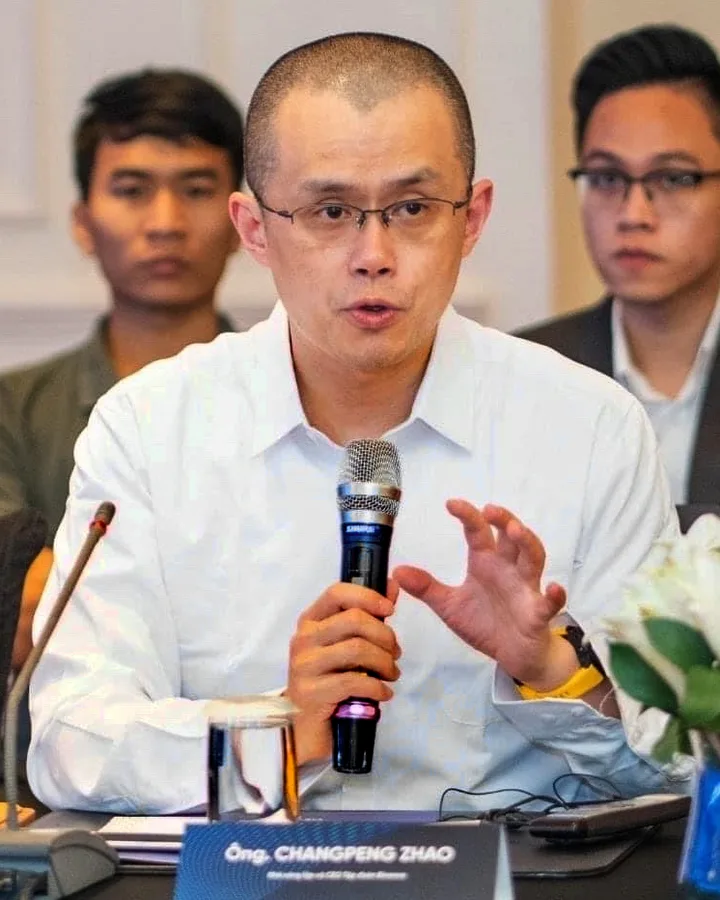

Capital and wealth path
- Canadian education and trading-systems work in Tokyo and New York built engineering and industry capital
- Entered crypto through Blockchain.info, OKCoin, and related ventures, building networks and assets
- Co-founded Binance in 2017; principal wealth comes from company interests and token-economy exposure
Asset and control boundaries
| Category | Finding | Status |
|---|---|---|
| Binance equity | A controlling interest is supported by regulatory and company material; exact percentages vary by definition | Confirmed |
| BNB holdings | He has disclosed holding BNB, but the full personal-company allocation boundary is unpublished | Unknown |
| Customer assets | Exchange-custodied customer assets cannot be counted as personal wealth | Confirmed |
Key-claim evidence ledger
| Claim | Reviewed finding | Grade | Source |
|---|---|---|---|
| Co-founded Binance | Confirmed by company history, regulatory filings, and court records | A | U.S. DOJ case material |
| Wealth mainly came from salary | Inconsistent with the public structure; Binance interests and crypto exposure are central | B | Company and regulatory material |
| Remained Binance CEO after resignation | Incorrect; he resigned as CEO following the 2023 plea agreement | A | DOJ announcement |
| In 2026 he said he has no current plan to be CEO or return to Binance | His statement in a June 2026 CoinDesk interview; he left open a later return, and the statement does not prove the economic interest was sold | B | CoinDesk interview |
Priority open questions
- What are his current economic and voting interests across Binance entities?
- What are the complete taxable and custodial balances of personal BNB, BTC, and other wallets?
Revision 2.1: Added the June 2026 CoinDesk interview in which he said he has no current CEO plans and does not intend to return to Binance, plus his self-reported donation of about US$2 million to Prison Professors. (2026-09-30)
At a glance
Section titled “At a glance”| Topic | Current finding | Evidence |
|---|---|---|
| Father | Shengkai Zhao, geophysics researcher; UBC PhD in 1993 | A |
| Parents’ careers | Both worked in education before migration; his father later developed geophysics software | B |
| Childhood household | Strong educational and technical capital, but no documented family fortune | B |
| Grandparents | Public evidence is too limited to support claims of elite political or wealthy ancestry | C |
| Major wealth | Primarily estimated Binance equity and crypto-related holdings | B, valuation |
| Legal status | Guilty plea in 2023, imprisonment in 2024, full pardon in 2025 | A |
A denotes official government, court, university, or company records; B direct reporting or corroborated accounts; C attributed recollections or credible secondary material; D unverified online claims.
Family and education
Section titled “Family and education”Shengkai Zhao
Section titled “Shengkai Zhao”Library and Archives Canada identifies Shengkai Zhao, born in 1944, as the author of Chebyshev spectral methods for potential field computation. He received a PhD from the University of British Columbia in 1993; the thesis was published in 1994. The record can be checked independently through Library and Archives Canada and UBC Open Collections.
His work covered potential-field computation, Poisson equations, and geophysical inversion. A 1994 industry newsletter also documents his work on electromagnetic interpretation tools. PetRos EiKon newsletter
These records establish substantial technical capital, not personal wealth. A Fortune investigation quoted a former colleague who described Zhao as technically capable but unable to turn that work into a large commercial fortune. Fortune profile
Mother, sister, and grandparents
Section titled “Mother, sister, and grandparents”CZ has said that both parents were teachers. Reporting broadly agrees that his father went to Canada first and that CZ later reunited with him in Vancouver with his mother and sister. His mother did not continue her prior professional path in Canada, in part because of language and credential barriers.
Reliable public records do not establish his mother’s or sister’s full careers, nor the identities and assets of his grandparents. Claims of senior-official relatives, a mining fortune, or hidden inherited wealth remain unsupported. The absence of evidence also does not prove that the grandparents were destitute.
Migration and early resources
Section titled “Migration and early resources”CZ spent parts of his childhood in Jiangsu and Hefei before migrating to Vancouver. The clearest family advantages were an emphasis on education, his father’s mathematical and computing knowledge, access to the Canadian education system, and early exposure to computers.
Media accounts and federal sentencing materials record that CZ worked at McDonald’s and a gas station as a teenager. This is consistent with a first-generation immigrant household without abundant cash, but it is not a precise measure of household assets. Federal sentencing materials
From trading-systems engineer to Binance
Section titled “From trading-systems engineer to Binance”Building the relevant capabilities
Section titled “Building the relevant capabilities”Fortune’s interviews with CZ, his family, and former colleagues, together with the early Binance white paper, support a stable career sequence. Around 2000 he accepted an internship with a Tokyo Stock Exchange contractor and worked on order matching. He then developed futures-trading software at Bloomberg Tradebook in New York and took on management duties. In 2005 he returned to Shanghai and founded Fusion Systems, which supplied high-frequency-trading and exchange systems to brokers. Fortune profile Early Binance white paper
This experience helps explain Binance’s emphasis on matching performance, uptime, and the rapid replication of market infrastructure. It also locates CZ’s main advantage in trading technology and cross-border execution—not family-provided licenses, customers, or capital.
After discovering Bitcoin in 2013, CZ moved from conventional financial technology into crypto, serving as head of technology at Blockchain.info and later as OKCoin’s CTO. Sources vary slightly on the exact months, but the capability chain—trading systems, Bitcoin infrastructure, then centralized exchange—is clear.
Launch, ICO, and rapid expansion
Section titled “Launch, ICO, and rapid expansion”Binance launched in 2017. Its early white paper set an initial BNB supply of 200 million: 50% for the public sale, 40% for the founding team, and 10% for angel investors. It also described an original profit-funded repurchase-and-burn arrangement. Binance later changed the burn mechanics, so the 2017 paper is not a complete statement of today’s economics.
The token sale and exchange launch coincided with a broad crypto boom. Crypto-to-crypto trading, broad token coverage, low fees, and BNB fee discounts helped Binance acquire international users quickly. After China tightened ICO and exchange regulation in September 2017, the team dispersed servers, entities, and operations across jurisdictions. That mobile model accelerated growth while also creating later licensing, customer-identification, and anti-money-laundering problems.
CZ was the central founder and long-term controlling shareholder, but “Binance is his personal wallet” is not an accurate legal description. Binance comprises multiple entities, platforms, and affiliates; private-company equity, BNB, affiliated businesses, and personal assets require separate accounting.
Wealth formation
Section titled “Wealth formation”CZ studied computer science at McGill University but did not receive a degree: Fortune’s interviews report that he left in 2000 after receiving an internship opportunity in Tokyo. He then worked on trading and high-frequency-trading systems in Tokyo and New York. This period built software expertise, market-infrastructure knowledge, and an international professional network rather than documented inherited wealth.
After Binance was founded in 2017, private-company equity, exchange economics, and BNB-related holdings became the principal sources of his fortune. Forbes currently estimates that CZ owns roughly 90% of Binance and holds BNB. Because Binance is private, both the ownership percentage and net-worth figure are estimates rather than an audited personal balance sheet. Forbes profile
The defensible conclusion is that CZ is the first generation of the Zhao family to create wealth on this scale.
A 2024 Forbes model split that fortune into two major components: an estimated 90% private-company interest in Binance and approximately 94 million BNB attributed through that ownership. The latter included modeled portions of the founding-team allocation and tokens retained within the exchange system after the ICO. Forbes BNB estimate This is a journalistic attribution model, not a set of addresses publicly signed by CZ; it is highly sensitive to assumptions about Binance ownership, beneficial ownership of tokens, and liquidity.
Role after stepping down
Section titled “Role after stepping down”CZ resigned as Binance CEO under the 2023 plea resolution and Richard Teng succeeded him. Leaving management did not mean selling his Binance interest. The DOJ and CFTC resolutions imposed compliance improvements and monitorship requirements while CZ continued to be widely described as the controlling shareholder.
After serving his sentence, his public work shifted toward investing, education, and government advice. Giggle Academy identifies him as the founder of its free online children’s education platform. Giggle Academy These projects document a changed public role; they do not establish that he has zero informal influence over Binance or provide a basis for valuing the new ventures.
In a June 2026 CoinDesk interview, Zhao said he has no plans to be a CEO at the moment, does not want to return to Binance at this stage, and has no interest in running Binance.US. He described his current work as advising companies he invests in, while also saying he has not entirely ruled out a later return to Binance. Those are his own statements. They record a public role and do not prove that he has sold his Binance economic interest or that informal influence is zero. In the same interview he said he has given about US$2 million to Prison Professors; that figure is self-reported, not an audited donation schedule. CoinDesk interview
Legal timeline
Section titled “Legal timeline”| Date | Event |
|---|---|
| November 21, 2023 | Pleaded guilty to a Bank Secrecy Act violation involving failure to maintain an effective anti-money-laundering program |
| April 30, 2024 | Sentenced to four months in prison and a $50 million fine |
| September 2024 | Completed the four-month custodial sentence and was released |
| May 29, 2025 | The SEC civil action against Binance and CZ was dismissed with prejudice |
| October 21, 2025 | Received a full and unconditional presidential pardon |
The company-level DOJ resolution exceeded $4 billion. A separate CFTC consent order imposed a $150 million civil penalty on CZ personally and required Binance to pay a penalty and disgorgement. Corporate, civil, and personal amounts should not be collapsed into one number. DOJ resolution CFTC consent order release
The guilty plea and sentence remain historical facts; a pardon should not be described as though no conviction ever occurred. Conversely, allegations in the SEC complaint were not adjudicated facts, and the civil action was later dismissed. U.S. Department of Justice case page, SEC dismissal, signed pardon
Unresolved claims
Section titled “Unresolved claims”Public-record review update
Section titled “Public-record review update”In a 2026 long-form interview, Zhao supplied the basic outline of his mother’s work history: she taught mathematics and history in China; after immigrating to Canada, limited English prevented her from obtaining equivalent teaching work and she took a sewing job in a garment factory. This is direct testimony and is consistent with Fortune’s investigation of the family’s early Vancouver circumstances. It supports the basic description “teacher in China, low-paid garment work after migration,” while the schools, dates, and complete later career remain undisclosed. All-In interview transcript Fortune profile
The U.S. Department of Justice’s Binance criminal information describes Zhao as Binance’s “primary founder, majority owner, and CEO,” confirming majority ownership for the relevant period in a legal filing. It gives no percentage and does not prove the media estimate of roughly 90% or Zhao’s personal BNB quantity. DOJ criminal information
- The identities, occupations, and assets of CZ’s grandparents;
- His mother’s schools, employment dates, and complete post-migration career;
- CZ’s exact economic interest in Binance and BNB;
- Online claims about elite relatives, substantial ancestral property, or a wealthy family origin.
Assessment
Section titled “Assessment”The Zhao family’s most visible intergenerational assets were education, quantitative skills, and migration opportunities. Shengkai Zhao moved from education into North American technical research; CZ converted related technical and cross-border experience into exchange entrepreneurship. The evidence supports neither a traditional inherited-fortune narrative nor an oversimplified claim that he had no meaningful family advantages.
Key sources
Section titled “Key sources”- Library and Archives Canada: Shengkai Zhao thesis record
- UBC Open Collections
- Fortune: The Making of Binance’s CZ
- U.S. Department of Justice: United States v. Changpeng Zhao
- SEC dismissal of the Binance/CZ civil action
- DOJ: signed pardon for Changpeng Zhao
- Early Binance white paper
- CFTC: Binance/CZ consent order
- Forbes: modeled Binance equity and BNB attribution
- CoinDesk: June 2026 interview with Changpeng Zhao
Last reviewed September 30, 2026. Relationships, regulatory status, and wealth estimates may change.